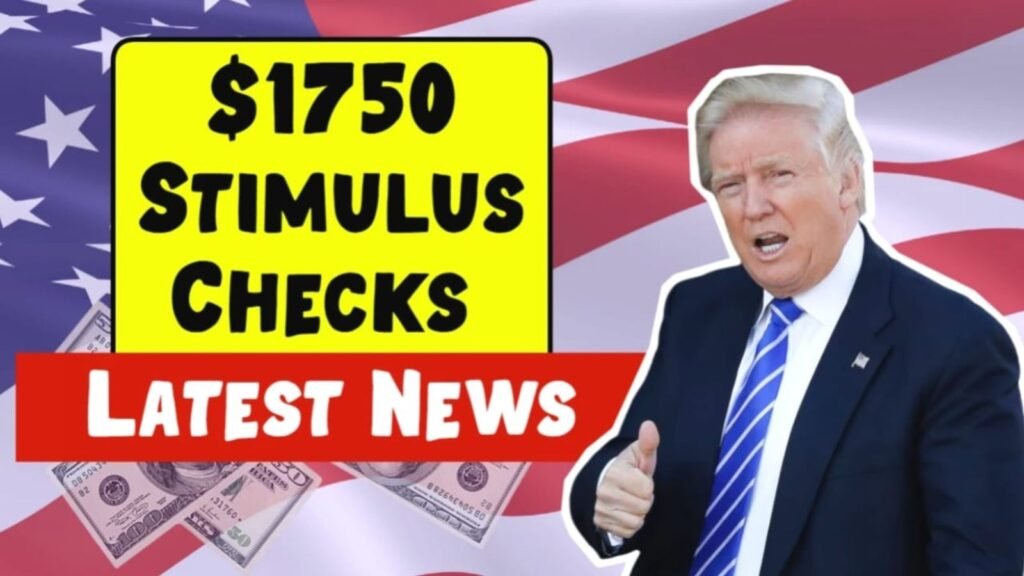

Scroll through TikTok, Facebook reels, or YouTube Shorts, and it’s almost impossible to miss the headlines. Influencers and viral posts confidently claim that every American is about to receive a $1,702 stimulus check just in time for the holidays. The excitement is understandable. With inflation still pressuring household budgets and year-end expenses piling up, the idea of extra cash feels like a lifeline.
However, once the noise is stripped away, the reality behind the $1,702 stimulus check is far more specific—and far less universal—than social media suggests. While a real payment of $1,702 does exist, it is not a new federal stimulus, not issued by the IRS, and not available nationwide.
Understanding the truth requires slowing down, separating facts from viral exaggeration, and looking at where this number actually comes from.
What Is the $1,702 Stimulus Check Really About?
First, let’s be very clear: there is no new federal $1,702 stimulus check approved for all Americans. Congress has not passed a new nationwide relief bill, and the IRS has not announced any fresh stimulus payments for December.
The confusion comes from a state-level annual payout program that has been operating for decades. This program distributes yearly dividends to eligible residents based on the state’s revenue—often tied to natural resources or investment earnings. This year, that dividend amount is approximately $1,702, which is why the phrase $1,702 stimulus check has exploded across the internet.
The issue isn’t that the payment is fake—it’s that the context has been completely removed.
Where Did the $1,702 Amount Come From?
The $1,702 stimulus check figure didn’t appear out of thin air. It is calculated annually based on how much revenue the state generates during a specific fiscal period. Some years the payout is higher, other years it is lower. This year’s estimate landed near $1,702 due to favorable earnings and legislative approval.
This payment is part of a long-running dividend system that rewards eligible residents for maintaining residency and meeting specific criteria. It is not tied to economic emergencies, pandemics, or inflation relief packages.
What social media posts fail to mention is that this payment:
- Is issued by a state government
- Has strict residency requirements
- Applies only to people living in that state
- Has nothing to do with federal stimulus programs
Calling it a $1,702 stimulus check makes it sound familiar and urgent, which is exactly why the rumor spread so quickly.
Why So Many People Believed the $1,702 Stimulus Check Claim
The belief didn’t come from nowhere. Between 2020 and 2021, Americans received three federal stimulus checks with little variation based on location. The process felt automatic, fast, and universal. That memory is still fresh.
So when people see posts claiming a $1,702 stimulus check is coming, the assumption is simple: “This must be another round.”

Add rising costs of living, holiday expenses, and financial anxiety, and people are primed to believe good news—especially when it’s framed as guaranteed.
Social media thrives on emotional reactions, not careful explanations. Hope spreads faster than corrections.
How the $1,702 Stimulus Check Rumor Went Viral
Short-form content platforms are a major driver of the misinformation. Many viral videos use:
- Bold headlines
- Countdown-style thumbnails
- Phrases like “Everyone qualifies” or “Check your account now”
These posts rarely explain eligibility rules. Instead, they rely on engagement. The more shocking the claim, the more views it gets.
As the phrase $1,702 stimulus check gained traction, it was copied, reposted, and reworded thousands of times. Soon, the original context disappeared completely.
Unfortunately, this also opened the door for scams.
Scammers Quickly Took Advantage of the $1,702 Stimulus Check Confusion
Any time money is involved, scammers move fast. The sudden popularity of the $1,702 stimulus check gave fraudsters a perfect opportunity.
Reports quickly surfaced of:
- Fake IRS emails claiming “verification required”
- Text messages asking for banking details
- Websites offering “early access” to the $1,702 payment
- Requests for upfront fees
None of these are legitimate. No government agency charges a fee to release public funds. No official program asks for private information through text messages or social media.
The confusion surrounding the $1,702 stimulus check made many people vulnerable, especially those already under financial stress.
Who Actually Qualifies for the $1,702 Stimulus Check?
Despite how it’s being presented online, the $1,702 stimulus check is only available to residents of one specific U.S. state. Even then, not everyone in that state qualifies automatically.
Eligibility typically requires:



- Verified state residency for a minimum period
- Physical presence during the qualifying year
- Proper filing of required applications or state taxes
- No disqualifying criminal convictions
- Compliance with program deadlines
If you do not live in the state that administers this dividend program, there is no legal way to receive the $1,702 stimulus check.
It is not connected to:
- Social Security
- SSDI or SSI
- Veterans benefits
- Federal tax refunds
State officials have repeatedly clarified that this is not a nationwide payment, yet the rumor persists.
When Will Eligible Residents Receive the $1,702 Payment?
For those who do qualify, timing follows a familiar pattern based on previous years.
- Early applicants usually receive direct deposits in mid-December
- A second wave often arrives closer to the end of December
- Late or flagged applications may be delayed until January 2026
- Paper checks take longer due to holiday mail volume
Residents are encouraged to rely only on official state communications for payment updates. Third-party blogs and viral videos often provide inaccurate timelines.
Why Calling It a $1,702 Stimulus Check Is Misleading
The term “stimulus check” implies federal relief designed to boost the economy. That’s not what this payment is.
The $1,702 stimulus check label creates confusion because:
- It suggests universal eligibility
- It implies IRS involvement
- It feels urgent and time-sensitive
- It mirrors past federal programs
In reality, this is a routine state dividend, not an emergency relief measure. Using the stimulus label may generate clicks, but it does not reflect the truth.
The Real-World Impact of the $1,702 Stimulus Check Misinformation
This rumor isn’t just annoying—it has consequences.
Some households delay bill payments believing the $1,702 stimulus check is coming. Others adjust holiday spending plans or take financial risks based on expected money that will never arrive.
Worse, some people lose money or personal data to scams because they trust misleading information.
In an era where financial decisions are already difficult, misinformation adds unnecessary pressure.

How to Protect Yourself from $1,702 Stimulus Check Scams
Consumer protection experts recommend a few simple rules:
- Ignore unsolicited messages about government payments
- Never share personal information through social media links
- Do not pay fees to receive public funds
- Verify claims through official government sources
- Be skeptical of content that guarantees money
As one fraud analyst explained, “When people are confused, scammers don’t need to lie much—they just need to let assumptions do the work.”
Why This Issue Reflects a Bigger Problem
The $1,702 stimulus check rumor highlights a growing issue: financial misinformation spreads faster than corrections.
Between algorithm-driven platforms and declining trust in traditional news, even reasonable people can be misled. The problem isn’t intelligence—it’s volume. People are exposed to the same claim hundreds of times before they see a fact-check.
That repetition creates belief.
The Bottom Line on the $1,702 Stimulus Check
The $1,702 stimulus check is real—but it is not federal, not universal, and not new. It applies only to eligible residents of one state participating in a long-established dividend program.
If you live in that state and meet the requirements, the payment is legitimate and already scheduled. For everyone else, there is no $1,702 stimulus check coming from the IRS or Congress.
Before resharing posts or planning your finances around viral claims, pause and verify. In today’s information landscape, understanding the full picture is just as important as hearing the headline.
A little skepticism can protect your wallet, your data, and your peace of mind.